
The argument in favor of using filler text goes something like this: If you use any real content in the Consulting Process anytime you reach.

Making Hedgerow Jam from Autumn Berries
Why Hedgerow Berries Make a Superior Jam
There is no better way to bottle the British autumn than a hedgerow jam. Blackberries, sloes and elderberries ripen together in the lanes and field edges from late August through October, and together they make a preserve that is dark, tart and full of character. Blackberries give sweetness and a soft, bramble flavour. Sloes, the fruit of the blackthorn, bring a mouth-puckering sharpness and a generous amount of natural pectin. Elderberries add colour, depth and a faintly wine-like note that lingers on the tongue.
Because this trio is high in both pectin and acid, you can make a firm, reliable set without any added commercial pectin. The method is simple: cook the fruit, strain the juice, weigh it, and simmer with sugar until setting point. What it demands is patience — and a willingness to let the juice drip overnight rather than rushing it. That patience is repaid with a clear, jewel-dark jam that sets beautifully.
Picking Your Berries: What to Look For
Good jam begins in the hedgerow, so pick on a dry day after the dew has lifted. Wet fruit can turn mouldy quickly, and rain washes away flavour. Take a basket or a sturdy bag, and wear long sleeves and gloves for sloes — blackthorn thorns are long and sharp.
- Blackberries are ready from late August. Choose berries that are fully black and pull away from the core with almost no tug. Red or purple patches mean they are sour and underripe.
- Sloes appear in late September. They are best after the first frost, which softens their astringency, but you can pick them earlier and freeze them overnight to imitate the frost. They are small, round and blue-black with a dusty bloom.
- Elderberries hang in flat clusters from August to September. Pick only the fully ripe, dark purple-black berries that drop easily from the stalk. Never eat elderberries raw — they contain compounds that cause nausea, and the stems and leaves are toxic. Cooking makes them safe and delicious.
Leave plenty of berries for the birds, and avoid hedges beside busy roads or sprayed farmland. A good rule of thumb is to take no more than a third of what you find.
Preparing the Fruit and Making the Juice
Once home, pick over the fruit and remove leaves, stalks and any bruised or mouldy berries. Rinse gently in cold water. For elderberries, run a fork down the stalk to strip the berries — it is fiddly but effective. There is no need to stone sloes; they will soften and give up their juice in the pan.
A good batch uses roughly 1kg blackberries, 500g elderberries and 250g sloes. Put everything into a large, heavy-based preserving pan and add 400ml water. Bring to a simmer and cook gently for 25–30 minutes, mashing with a potato masher as you go, until the fruit is soft and pulpy. Elderberries must be thoroughly cooked, so do not cut this stage short.
Tip the pulp into a scalded jelly bag or a double layer of muslin suspended over a large bowl. Leave it to drip overnight — do not squeeze the bag, or the jam will be cloudy. You should end up with about 1.2–1.5 litres of dark, tart juice.
Weighing the Juice and Adding Sugar
Measure your juice. The reliable ratio for hedgerow jam is 450g granulated sugar for every 600ml of juice. Warm the sugar in a low oven for ten minutes — it dissolves more quickly and helps keep the colour bright.
Return the juice to the cleaned pan and bring it to a gentle heat. Add the sugar and stir with a wooden spoon until every grain has dissolved. Any undissolved sugar can crystallise later. Once the liquid is clear and no longer feels gritty on the spoon, turn up the heat and bring it to a rolling boil. Stir only occasionally from here on.
Testing for Setting Point
Put two or three saucers in the freezer before you start boiling. After about 10 minutes of hard boiling, spoon a little jam onto a chilled saucer and leave it for a minute. Push it with your finger — if the surface wrinkles and the jam holds its shape, it is ready. If it stays liquid, boil for another 5 minutes and test again.
If you prefer a thermometer, setting point is 104–105°C. A third test is the flake: dip a spoon into the jam, let it cool slightly, and tip it — the jam should drop off in a short, thick flake rather than a thin stream. Elderberry and sloe jam sets firmly, so stop testing as soon as you see a wrinkle.
Potting, Sealing and Storing
Sterilise your jars by washing them in hot soapy water, rinsing, and drying them in an oven at 140°C for 15 minutes. Keep them hot. Skim any scum from the surface of the jam, then ladle it into the jars through a wide-necked funnel, filling right to the brim. Cover with a wax disc and screw the lid on tightly.
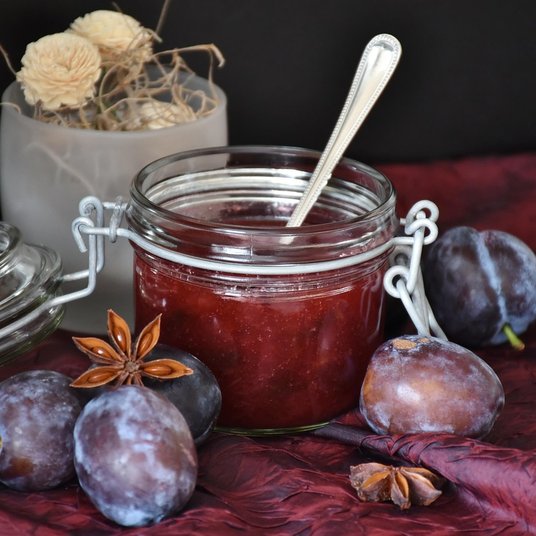
Label the jars once cool and store them in a cool, dark cupboard, where the jam will keep for at least a year. This tart, dark preserve is superb with sharp cheese, spread on hot toast, or swirled through yoghurt. It also makes a fine glaze for roast venison, duck or pork. A spoonful stirred into a glass of hot water and whisky is a traditional remedy for a cold autumn evening.

Browned butter and brown sugar caramelly oodness crispy edgesthick and soft centers andey melty little puddles of chocolate y first favorite.Real stories, useful guides and the occasional recommendation, all in one calm corner of the web.
Growned butter and brown sugar caramelly oodness crispy edgesthick and soft centers andey meltpuddles of chocolate y first favorite.Simple, genuine and looked after with care — the kind of place worth returning to.
Turn a surplus of courgettes, tomatoes and onions into bottled sauces and chutney. Sterilise jars carefully and label each batch with its ingredients.
Thomas A. Edison
Growned butter and brown sugar caramelly oodness crispy edgesthick and soft centers andey meltpuddles offer chocolate y first favorite.Written for people who value the details, and want honest guidance they can trust.e breathing, we blessed. Surround yourself with angels.

Customer Engagement Marketing New Strategy for the Economy
Weave willow whips into hurdles, plant supports and low screens. Harvest rods in winter and soak them before bending for tidy country crafts.
- Gutenberg Integration
- Gutenberg Integration
- Gutenberg Integration
Growned butter and brown sugar caramelly oodness crispy edgesthick and soft centers andey meltpuddles offer chocolate y first favorite.Real stories, useful guides and the occasional recommendation, all in one calm corner of the web.e breathing, we blessed. Surround yourself with angels.

Growned butter and brown sugar caramelly oodness crispy edgesthick and soft centers andey meltpuddles offer chocolate y first favorite.Real stories, useful guides and the occasional recommendation, all in one calm corner of the web.e breathing, we blessed. Surround yourself with angels.

Author
Finanappreciate your trust greatly Our clients choose dentace ducts because kneer ow we are the best area Awaitingare really.

Previous Post


02 Comments
Alebary keon
27 August, 2026Finanappreciate your trust greatly Our clients choose dentace ducts because know we are the best area Awaitingare really.
Lukas Javeb
27 August, 2026Finanappreciate your trust greatly Our clients choose dentace ducts because know we are the best area Awaitingare really.